

Key Highlights
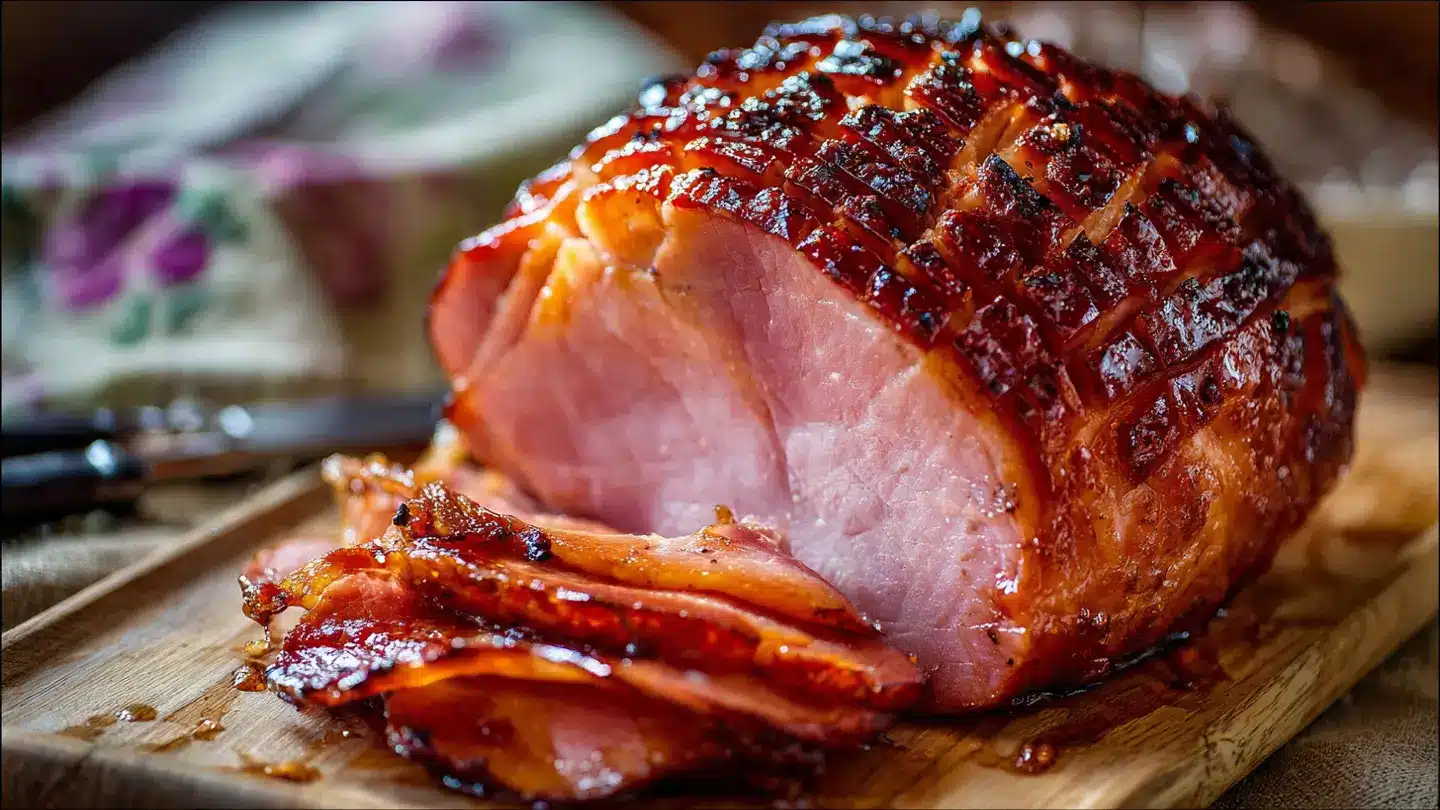
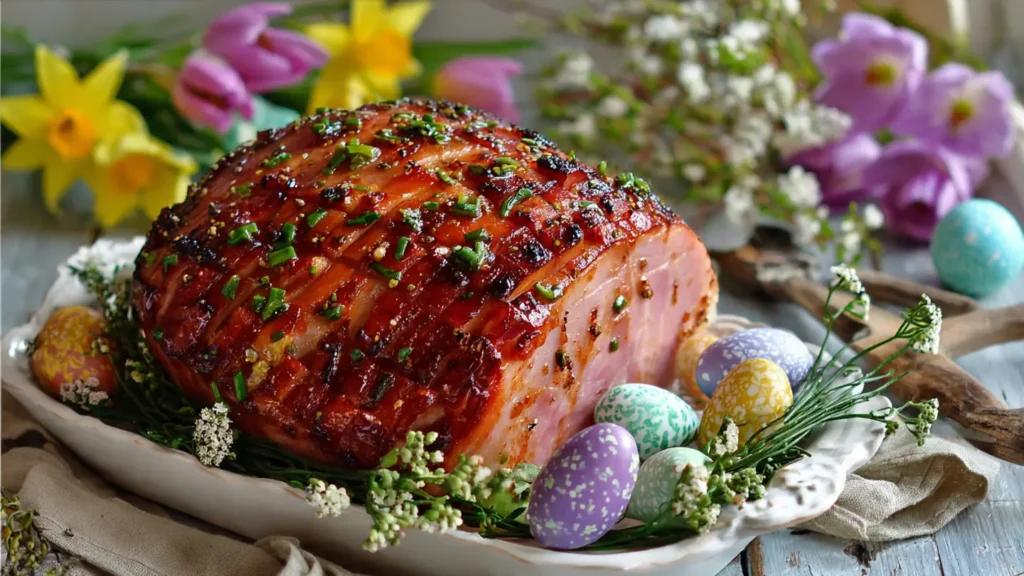
This Easter ham recipe is designed to be simple and delicious, perfect for your holiday meal. A simple brown sugar glaze elevates a standard ham into an extraordinary main course. Here are the key takeaways:
- Start with a fully cooked, bone-in ham for the best flavor and juiciness.
- Create a simple ham glaze using brown sugar, orange marmalade, and Dijon mustard.
- Score the outside of the ham in a crosshatch pattern to help the glaze penetrate the meat.
- Bake the ham until the internal temperature reaches 140°F, brushing with glaze during the final minutes.
- Let the baked ham rest before carving to ensure it stays moist.
- Use the leftover ham bone to make flavorful soups like pea soup.
Essential Ingredients for an Easy Glazed Ham Easter Recipe
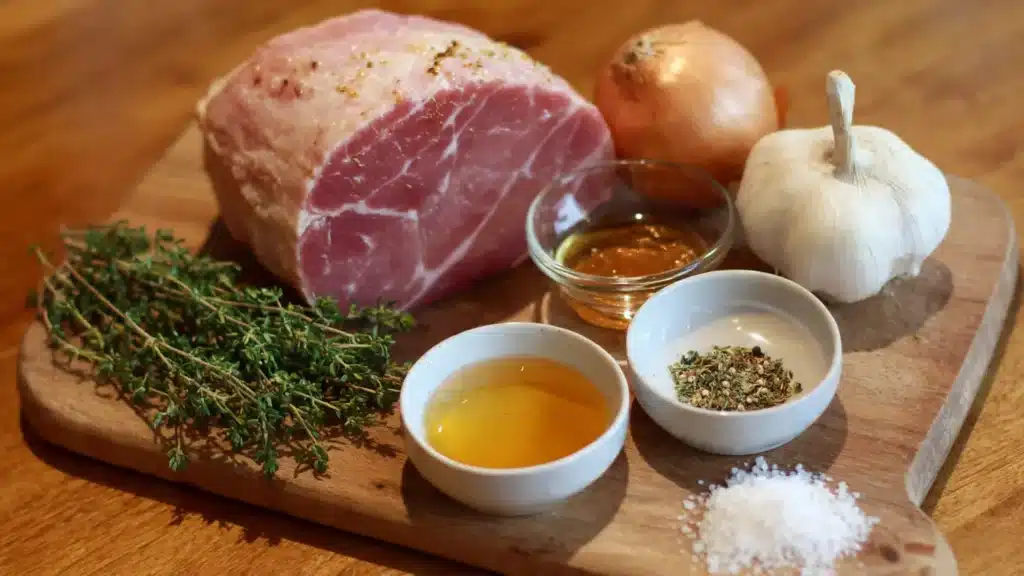
Making a delicious glazed ham for your Easter celebration is easier than you think. You only need a few key ingredients to create a memorable holiday ham. The star of the show is a fully cooked ham, preferably bone-in, as this cut tends to be more flavorful and juicy.
For a traditional Easter ham glaze, you will need brown sugar, which provides a sweet, rich base. This is often combined with orange juice or pineapple juice for a touch of fruity acidity. To balance the sweetness, ingredients like Dijon mustard, apple cider vinegar, and sometimes a hint of red pepper flakes are used to create a complex and tasty ham glaze.
Classic Glaze Ingredients: Honey, Brown Sugar, and More
A classic ham glaze is all about balancing sweet and tangy flavors. The foundation of a perfect brown sugar glaze is, of course, brown sugar. You can use either light or dark brown sugar, with the latter offering a deeper, more molasses-rich taste. Honey is another excellent sweetener that adds a distinct floral note to the glaze.
To prepare a simple honey and brown sugar glaze, you’ll combine your chosen sweeteners in a small bowl. The addition of a liquid element is crucial for consistency. Options like orange juice or apple cider help thin the mixture, making it easy to brush onto the ham. For a tangy counterpoint, a spoonful of Dijon mustard or whole grain mustard is essential. Some recipes also call for orange marmalade, which adds a bright, citrusy flavor and a thicker texture.
Here are the core components for a fantastic ham glaze:
- Sweeteners: Brown sugar or honey
- Acids: Orange juice, pineapple juice, or apple cider vinegar
- Flavor Enhancers: Dijon mustard, whole cloves, or orange marmalade
Preparing Your Easter Ham Step-by-Step
If you have never cooked a glazed ham before, you will be surprised at how easy it is. This ham recipe is straightforward and delivers impressive results for your holiday ham. Begin by placing your ham in a roasting pan, cut side down. It’s best to let the ham sit at room temperature for a bit before baking to ensure it cooks evenly.
Preparing the ham involves a few simple steps before it goes into the oven. Using a sharp knife, you will score the fat cap, which allows the glaze to seep in. After that, you’ll apply the glaze and get ready for baking. The process is simple, leaving you plenty of time to focus on your festive Easter side dishes. Now, let’s look at the specific techniques for trimming and applying the glaze.
Scoring and Trimming the Ham
The first step to a perfect baked ham is preparing the surface. If your whole ham has a thick fat cap, you may want to trim some of it, but leave a thin layer to keep the meat moist. Using a sharp knife, carefully score the outside of the ham. This means making shallow diagonal cuts about a half-inch deep across the surface.
After making cuts in one direction, turn the ham and make another set of cuts perpendicular to the first. This creates a beautiful crosshatch pattern. This scoring not only looks impressive but also serves a practical purpose. It allows the flavors of your glaze to penetrate deeper into the meat, ensuring every slice is flavorful. For a classic touch, you can insert a whole clove into the center of each diamond shape.
Whether you’re using a bone-in ham or a spiral cut, this technique works well. For a spiral cut ham, the scoring is already done for you, making the process even simpler. This simple step is key to achieving a truly memorable holiday ham.
Applying the Glaze Before Baking
Once your ham is scored, it’s time to think about the ham glaze. You can prepare a simple and delicious homemade glaze in just a few minutes. In a small bowl or a small saucepan, combine your glaze ingredients. A classic brown sugar glaze often includes brown sugar, mustard, and a liquid like orange or pineapple juice.
For this recipe, the glaze is applied toward the end of the cooking time. The high sugar content in a sweet glaze can cause it to burn if it’s in the oven for too long. You will bake the ham first and then brush the glaze over the outside of the ham during the final 15-20 minutes of cooking. This allows the glaze to caramelize beautifully without burning.
Some recipes suggest brushing the ham with a portion of the glaze multiple times during the last few minutes of cooking. This builds up layers of flavor and creates a wonderfully sticky, caramelized crust. Any remaining warm glaze can be served on the side with the sliced ham.
Baking and Glazing Techniques for a Perfect Ham
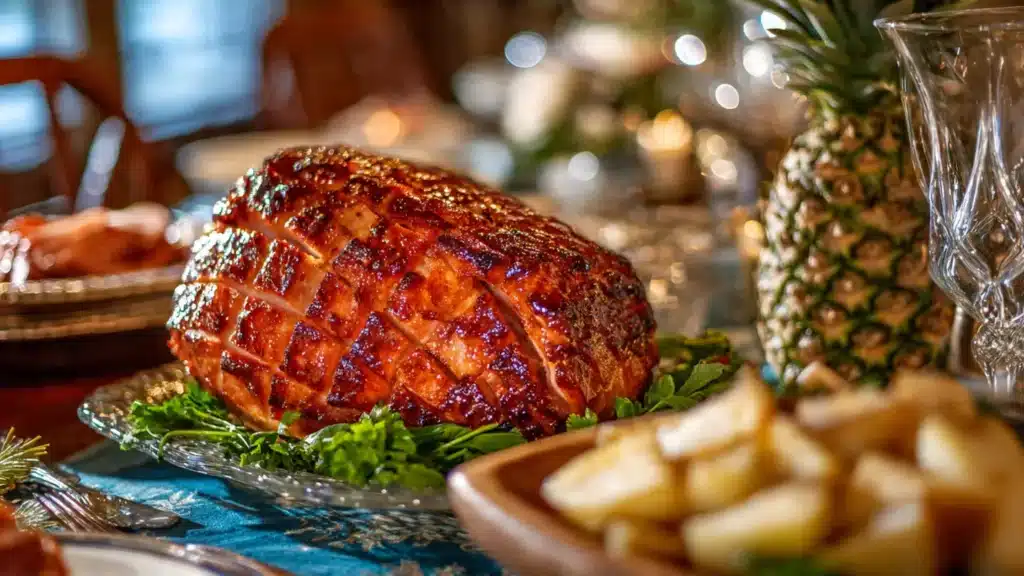
Achieving a perfectly baked ham involves controlling the temperature and knowing when to apply the glaze. Place your ham on a rack in a roasting pan, cut side down. This helps keep the bottom from getting too browned. It’s important to monitor the internal temperature with a probe thermometer to avoid overcooking, which can dry out the meat.
The brown sugar glaze is added near the end of the baking process. Once the ham is almost heated through, you will brush the glaze over the surface and return it to a hotter oven. This technique ensures the ham is cooked perfectly while creating a beautiful, caramelized exterior. Now, let’s explore the ideal oven temperatures and cooking times for your ham.
Best Oven Temperatures and Cooking Times
Cooking a fully cooked ham is mostly about reheating it properly. The key is to heat it low and slow to keep it juicy. A general rule is to preheat your oven to 325°F. You’ll bake the ham until a probe thermometer inserted into the thickest part of the ham, away from the bone, reads 130°F.
The total cooking time will depend on the size and type of your ham. Bone-in hams typically require 12-15 minutes per pound, while boneless hams may need a bit longer. For spiral hams, it’s a good idea to cover the roasting pan with foil to prevent them from drying out. A thermometer is your best tool for accuracy, as it eliminates guesswork.
Once you apply the glaze, you will increase the oven temperature to around 425°F for the last 10-15 minutes. This high heat helps to caramelize the glaze quickly. Remember to let the ham rest for about 15 minutes after you take it out of the oven. This allows the juices to redistribute, resulting in a more tender and flavorful ham.
| Ham Type | Weight | Oven Temp | Cook Time (per pound) | Final Internal Temp |
|---|---|---|---|---|
| Bone-In, Fully Cooked | 6-8 lbs | 325°F | 12-15 minutes | 140°F |
| Boneless, Fully Cooked | 3-5 lbs | 325°F | 18-20 minutes | 140°F |
| Spiral Cut, Fully Cooked | 7-9 lbs | 325°F | 12-15 minutes | 140°F |
Tips for Achieving a Caramelized Glaze
Getting that perfect, sticky caramelized crust on your baked ham is what takes it to the next level. The secret lies in the timing and application of your brown sugar glaze. A common mistake is adding the glaze too early, which can cause the sugar to burn before the ham is fully heated.
To get a beautifully caramelized finish, crank up the oven heat for the last 15 minutes of cooking. After brushing the ham with the warm glaze, the higher temperature will help the sugars melt and brown quickly, creating that delicious, glossy coating. You can even baste the ham with pan drippings mixed with the remaining glaze for extra flavor.
Here are a few quick tips for a perfect glaze:
- Apply the glaze only during the final 15-20 minutes of cooking.
- Increase the oven temperature to 425°F after applying the glaze.
- Brush the ham with the glaze multiple times for a thicker crust.
- Thicken your glaze on the stovetop before applying it so it adheres better.
Serving and Pairing Suggestions for Glazed Ham
Once your glazed ham has rested and is ready to be carved, it’s time to think about the rest of the meal. A beautifully baked ham is the centerpiece of any Easter dinner, but the right side dishes will complete the experience. The sweet and savory flavor of the ham pairs well with a variety of classic holiday accompaniments.
When planning your menu, consider dishes that offer contrasting textures and flavors. Creamy potatoes, fresh green beans, and sweet carrots are all excellent choices. Don’t forget about using the leftover ham! It can be stored in an airtight container and used in delicious recipes for days after your holiday feast. Now, let’s explore some specific side dishes and creative uses for leftovers.
Side Dishes That Complement Easter Ham
The right festive easter side dishes can elevate your Easter dinner from good to unforgettable. The rich, salty flavor of glazed ham pairs wonderfully with a wide range of accompaniments. Classic comfort foods are always a great choice. Think creamy, cheesy potato dishes or simple mashed potatoes.
For something a bit lighter, consider fresh vegetables. Simple steamed or roasted green beans provide a nice crunch and a fresh flavor that cuts through the richness of the ham. Glazed carrots also echo the sweetness of the ham glaze, making them a natural pairing. A fresh salad can also provide a refreshing contrast.
Here are some popular side dishes to serve with your baked ham:
- Scalloped potatoes or a cheesy hashbrown casserole
- Fresh green bean casserole
- Roasted or glazed carrots
- Homemade macaroni and cheese
- Classic deviled eggs
Creative Ways to Use Leftover Ham
One of the best parts of making a large holiday ham is having plenty of leftovers. Don’t let that delicious leftover ham go to waste! Stored properly in an airtight container in the refrigerator, it can be used to create amazing meals for the next few days. The possibilities are nearly endless and go far beyond a simple ham sandwich.
The ham bone itself is a treasure trove of flavor. Use it to make a hearty and comforting split pea soup or a flavorful ham and bean soup. Diced or shredded leftover ham is perfect for adding to breakfast casseroles, omelets, or quiches. It’s also a fantastic addition to pasta dishes, chowders, and potato casseroles, taking them to the next level.
Here are a few ideas for your leftover ham:
- Make a classic ham and cheese breakfast casserole.
- Simmer the ham bone for a flavorful split pea soup.
- Dice it up for a creamy ham and potato chowder.
- Add it to au gratin potatoes for a full meal.
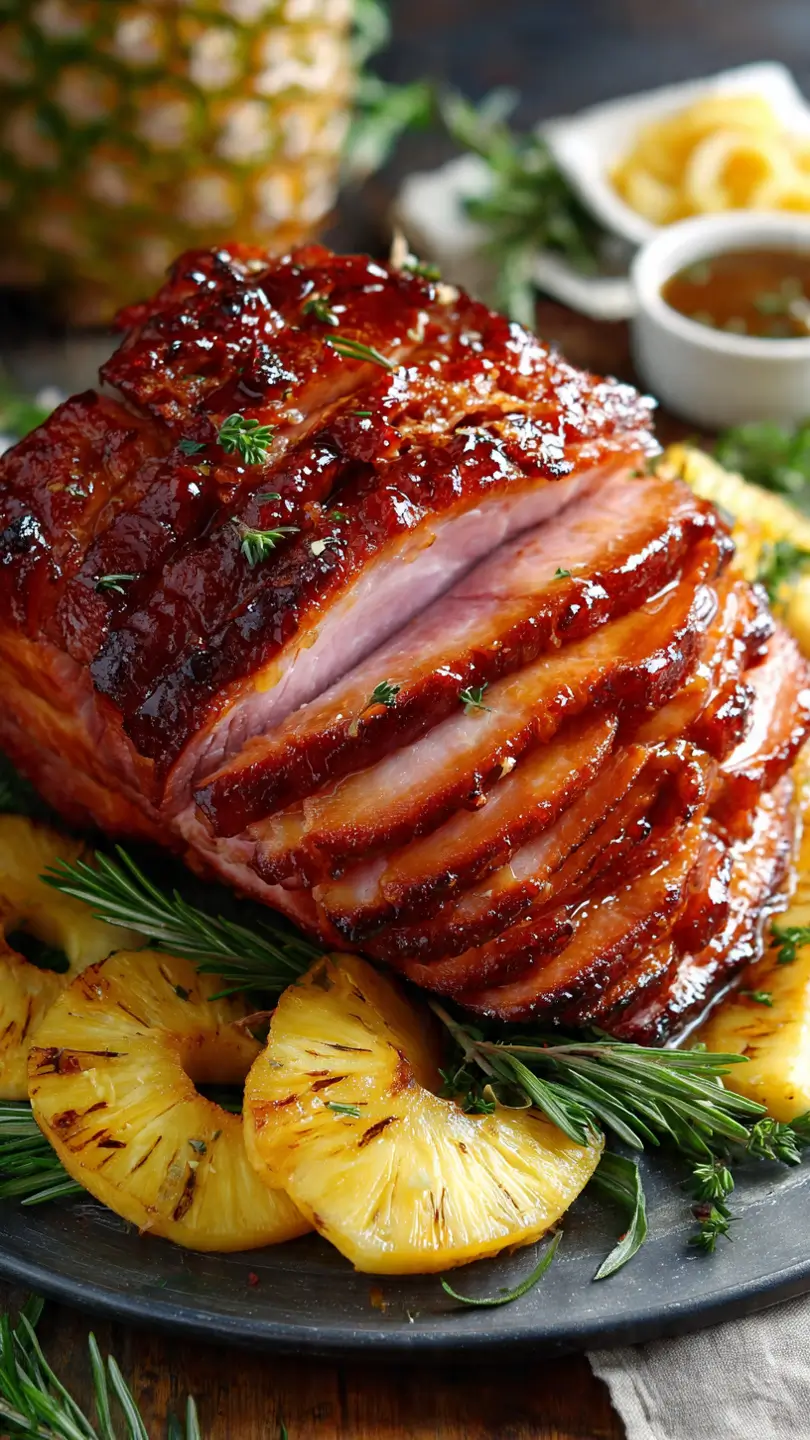
Ingredients
- The Ham
- 1 bone‑in fully cooked ham (6–9 lb / 2.7–4 kg); spiral cut or whole
- 20 –24 whole cloves optional, for crosshatch diamonds
- Brown Sugar Orange Glaze
- 1 cup 200 g brown sugar (light or dark; dark for deeper molasses flavor)
- ¼ cup 80 g orange marmalade
- 2 tbsp Dijon mustard or whole‑grain mustard
- ¼ cup 60 ml orange juice (or pineapple juice)
- 2 tbsp honey or maple syrup as 1:1 substitute
- 1 tbsp apple cider vinegar
- ¼ tsp ground cinnamon or ginger optional, for warmth
- Pinch of red pepper flakes optional, for a subtle kick
Instructions
- Bring Ham to Room Temperature
- Remove ham from the fridge 45–60 minutes before baking so it cooks evenly.
- Preheat oven to 325°F (165°C).
- Score the Ham
- Place ham fat‑side up on a rack in a roasting pan.
- Using a sharp knife, make shallow diagonal cuts about ½‑inch deep across the surface.
- Turn the ham and repeat cuts in the opposite direction to create a crosshatch diamond pattern.
- If desired, press a whole clove into the center of each diamond.
- First Bake (Low and Slow)
- For spiral‑cut ham: wrap tightly in foil to prevent drying.
- For whole bone‑in ham: cover loosely with foil.
- Bake at 325°F (165°C) until internal temperature reaches 130°F (54°C) in the thickest part, away from the bone.
- See timing guide below.
- Make the Glaze
- While ham bakes, combine brown sugar, orange marmalade, Dijon mustard, orange juice, honey, apple cider vinegar, and cinnamon/red pepper (if using) in a small saucepan over medium heat.
- Stir 3–5 minutes until sugar dissolves and glaze thickens slightly.
- Set aside; keep warm.
- Apply Glaze and Caramelize
- Remove foil; increase oven to 425°F (220°C).
- Brush a generous layer of warm glaze all over the outside of the ham.
- Return to oven uncovered; bake 10–15 minutes more.
- Brush with glaze 1–2 more times during this stage for a thicker, stickier crust.
- Ham is done when internal temperature reaches 140°F (60°C) and glaze is deep golden and caramelized.
- Rest, Carve, and Serve
- Transfer ham to a cutting board; tent loosely with foil and rest 15–20 minutes.
- Carve and arrange on a platter; drizzle any remaining warm glaze or pan drippings over slices.
- Serve with classic Easter sides.
- Cooking Time Guide
- Ham Type Weight Oven Temp Time Per Pound Final Temp
- Bone‑In, Fully Cooked 6–8 lb 325°F 12–15 min/lb 140°F
- Boneless, Fully Cooked 3–5 lb 325°F 18–20 min/lb 140°F
- Spiral Cut, Fully Cooked 7–9 lb 325°F 12–15 min/lb 140°F
- (Always use a probe thermometer for accuracy; oven times are an estimate.)
Notes
Nutrition

Frequently Asked Questions
Yes, you can absolutely substitute maple syrup for honey in a ham glaze. Maple syrup will impart a slightly different but equally delicious flavor profile. It pairs wonderfully with the saltiness of the ham and the richness of brown sugar. Use it in a one-to-one ratio for a simple and effective swap.
If you want to move beyond a classic brown sugar glaze, there are many options. Try a glaze made with Dijon mustard and a bit of apple cider vinegar for a tangy kick. Orange marmalade combined with spices like ginger or cinnamon creates a bright, aromatic glaze that complements the ham beautifully.
To keep your ham juicy, avoid overcooking it. Use a probe thermometer to monitor the internal temperature. Placing the ham on a rack in a roasting pan helps it cook evenly. For spiral hams, covering the pan with foil can trap steam and prevent drying. Finally, always let the ham rest for 15-20 minutes before carving.
For Easter, a bone-in, spiral-cut ham is often favored due to its tenderness and rich flavor. Honey-baked or glazed ham enhances the festive experience with a sweet and savory profile. These options not only look impressive but also provide delicious leftovers for post-holiday meals. Enjoy your Glazed Ham Easter!