


Key Highlights
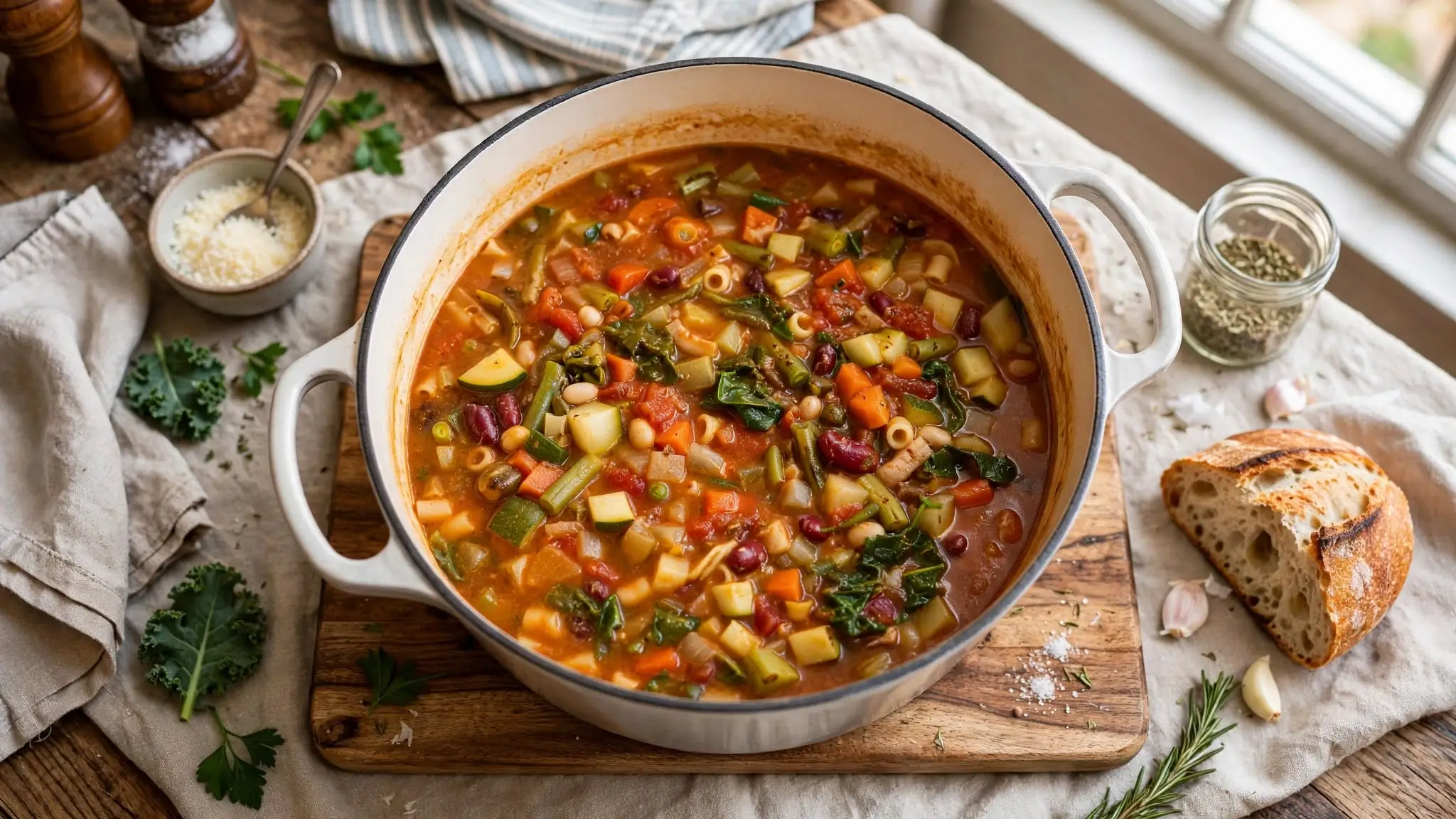
- This minestrone soup is a one-pot vegetable soup with beans, pasta, and a rich broth.
- You start with olive oil, onion, carrots, and celery for the base.
- Tomato paste, broth, and potatoes help build body and deep flavor.
- Small pasta and beans make it filling without making it heavy.
- Parmesan cheese is optional, so it can stay vegan if you want.
- Serve it hot with crusty bread for an easy, cozy meal at home.
What is Minestrone Soup?
Minestrone soup is an Italian-style vegetable soup made with vegetables, broth, beans or legumes, and usually small pasta, often enhanced with canned tomato sauce. That is the basic definition of minestrone soup. A classic minestrone soup can change from home to home, which is part of why people love it.
What makes it stand out from other vegetable soup recipes? It is heartier. The best minestrone soup recipe often includes beans, pasta, and a tomato-based broth, so each bowl feels like a full meal instead of just a side dish.
The Origins and Definition of Minestrone
In Italy, minestrone soup comes from the word minestra, which means soup. Some also connect it to the Italian verb that means “to serve.” So if you have asked for the definition of minestrone soup, it is a hearty Italian vegetable soup built from simple pantry and garden ingredients.
Across Italy, there are regional variations of italian minestrone soup. One family may use spinach, while another uses cabbage, zucchini, or green beans. Some versions include lentils, and others use white beans or kidney beans. That flexibility is part of its history.
At its core, minestrone soup belongs to the group of practical soup recipes. It was made to use seasonal produce and leftover ingredients without waste. Even with those changes, the base idea stays the same: vegetables, broth, beans or legumes, and often a little pasta.
What Makes Minestrone Unique Among Vegetable Soups
Many bowls of vegetable soup are light and brothy. Minestrone soup is different because it usually has beans and the addition of pasta. That combination makes it more filling and gives it the feel of a full dinner, not just a starter.
Another thing that sets it apart is how flexible it is. You can use what is in season or what is already in your fridge. Green vegetables, root vegetables, and legumes all work. That makes it a great way to cook without overthinking every step.
Then there is the finish. A spoonful of minestrone soup often gets a topping like fresh parsley, black pepper, or optional grated Parmigiano Reggiano cheese. Those simple touches wake up the bowl. Next, let’s look at the classic ingredients that give this soup its familiar taste and texture.
Essential Ingredients for Classic Minestrone
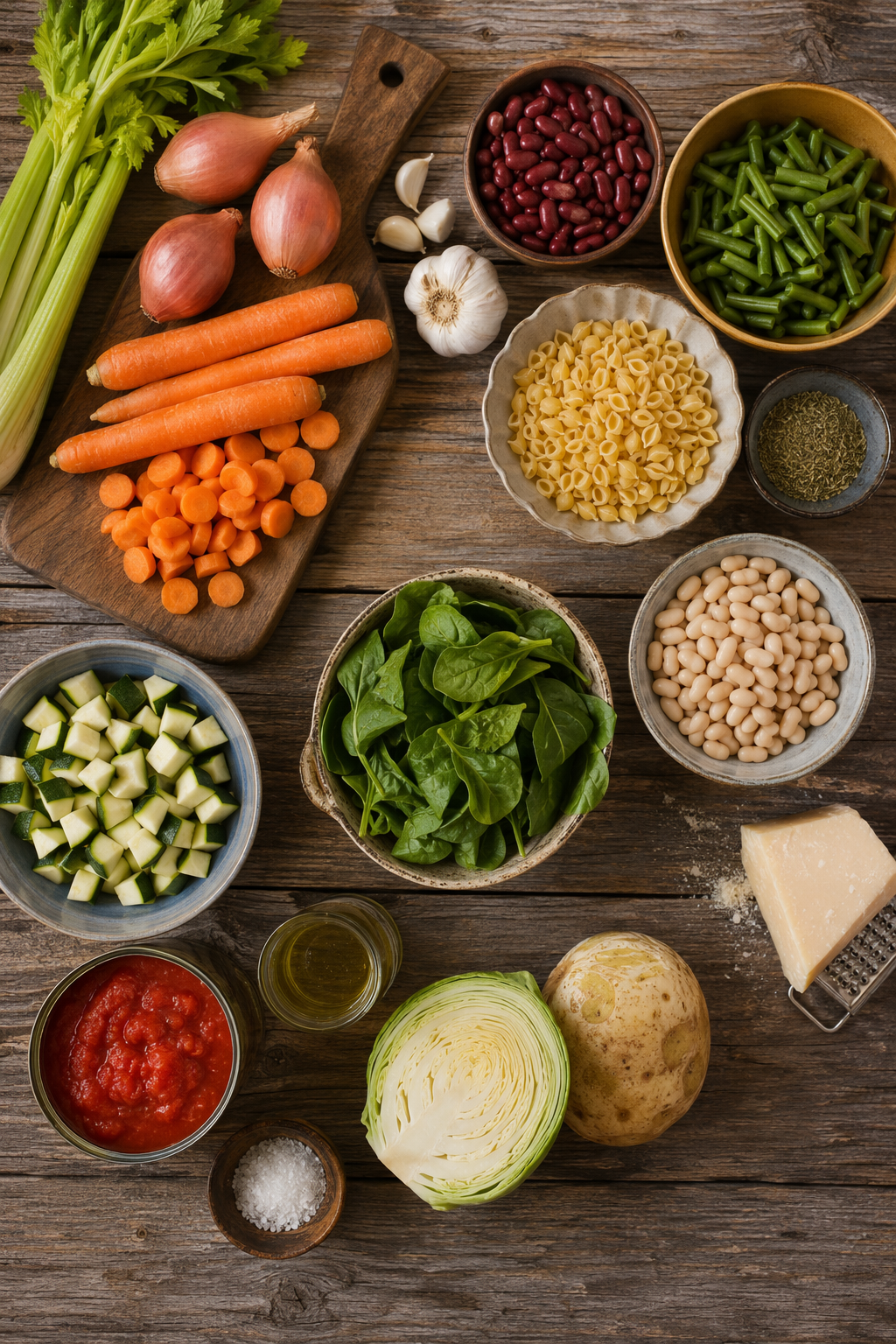 A traditional minestrone soup starts with a few dependable basics. Extra virgin olive oil, onion, celery, carrots, garlic, tomato paste, broth, beans, and small pasta create the backbone of a classic minestrone soup recipe. Potatoes are also useful because they add a little creaminess and help thicken the broth.
Parmesan cheese can be used as a garnish, and a parmesan rind can add extra flavor while the soup cooks. The vegetables and pasta matter too, so the next two sections break down what to choose and why those choices work.
Traditional Vegetables Used in Italian Minestrone
A traditional minestrone soup usually begins with onion, celery, and carrots. This base is common in many Italian dishes and helps create a deep, savory start. From there, the soup grows with seasonal vegetables, which is why recipes can vary by region and by season.
You do not need a fixed list to make it work. The idea is to use what is fresh and available. Tomato paste and minced garlic help tie the vegetables together and give the broth a stronger flavor.
- Onion, celery, and carrots are the classic starting vegetables.
- Potatoes add body and make the soup feel creamier.
- Green beans are a popular choice for texture and color.
- Spinach, kale, broccoli, cabbage, zucchini, and swiss chard all fit well.
- Seasonal vegetables keep traditional minestrone soup affordable and flexible.
Choosing the Right Pasta and Beans
If you want a thick and hearty bowl, choose small pasta and sturdy beans. Small pasta works best in minestrone because it spreads through the soup evenly and is easy to eat with the vegetables. Ditalini, tiny shells, elbow pasta, farfalline pastina, and fregola are all good picks.
For beans, canned options make things fast. Cannellini beans are soft and creamy. Kidney beans bring a firmer bite. Other white beans, such as those used in Tuscan white bean soup, can work too. Using two types of legumes or adding lentils makes the soup even heartier, similar in spirit to pasta e fagioli.
| Ingredient | Why it works in minestrone |
|---|---|
| Small pasta | Cooks quickly and mixes well with vegetables and broth |
| Ditalini or elbows | Classic shape for easy spoonfuls |
| Cannellini beans | Creamy texture and mild flavor |
| Kidney beans | Hold shape well and add color |
| White beans or lentils | Help create a thicker, more filling soup |
What You Need to Get Started
You do not need fancy tools to make this at home. A dutch oven or large pot is enough for most soup recipes, and both give you room to sauté the vegetables and simmer everything in one place. That keeps cleanup easy.
You will also want your ingredients ready before you start, especially the chopped vegetables, broth, pasta, and beans. Keep the extra virgin olive oil near the stove because it starts the whole process. Up next, here is the basic equipment that makes cooking smoother.
Basic Kitchen Equipment for Minestrone Soup
A dutch oven is a great choice for minestrone because it holds heat well and gives you enough space to cook a full batch. A large dutch oven is especially helpful if you want leftovers for the next day. If you do not have one, a large pot works just fine.
You also need a good spoon for stirring the soffritto and scraping up the tomato paste as it cooks. A wooden spoon is perfect because it is simple, sturdy, and easy to use.
- Dutch oven or large dutch oven for one-pot cooking
- Large pot if that is what you already have
- Wooden spoon for stirring and sautéing
- Knife and cutting board for prepping vegetables
Once your tools are set, the next step is choosing the best produce so your soup tastes fresh and balanced.
Tips for Selecting Fresh Ingredients
Fresh ingredients make a big difference here. Look for firm carrots, crisp celery, and bright greens. If you are using green beans, choose ones that snap cleanly. Seasonal vegetables usually bring the best flavor, and they fit the spirit of this soup.
For a vegetarian or vegan version, the key is simple. Use vegetable broth, skip parmesan rind, and leave out cheese on top. The soup is still full of flavor thanks to tomato paste, garlic, herbs, and good extra virgin olive oil.
- Pick seasonal vegetables for better flavor and value.
- Choose fresh parsley for a clean finish at serving time.
- Use extra virgin olive oil that smells fresh, not stale.
- Buy tender green beans and bright baby spinach.
- For vegan soup, use vegetable broth and skip dairy toppings.
Step-by-Step Guide: How to Make Minestrone Soup at Home
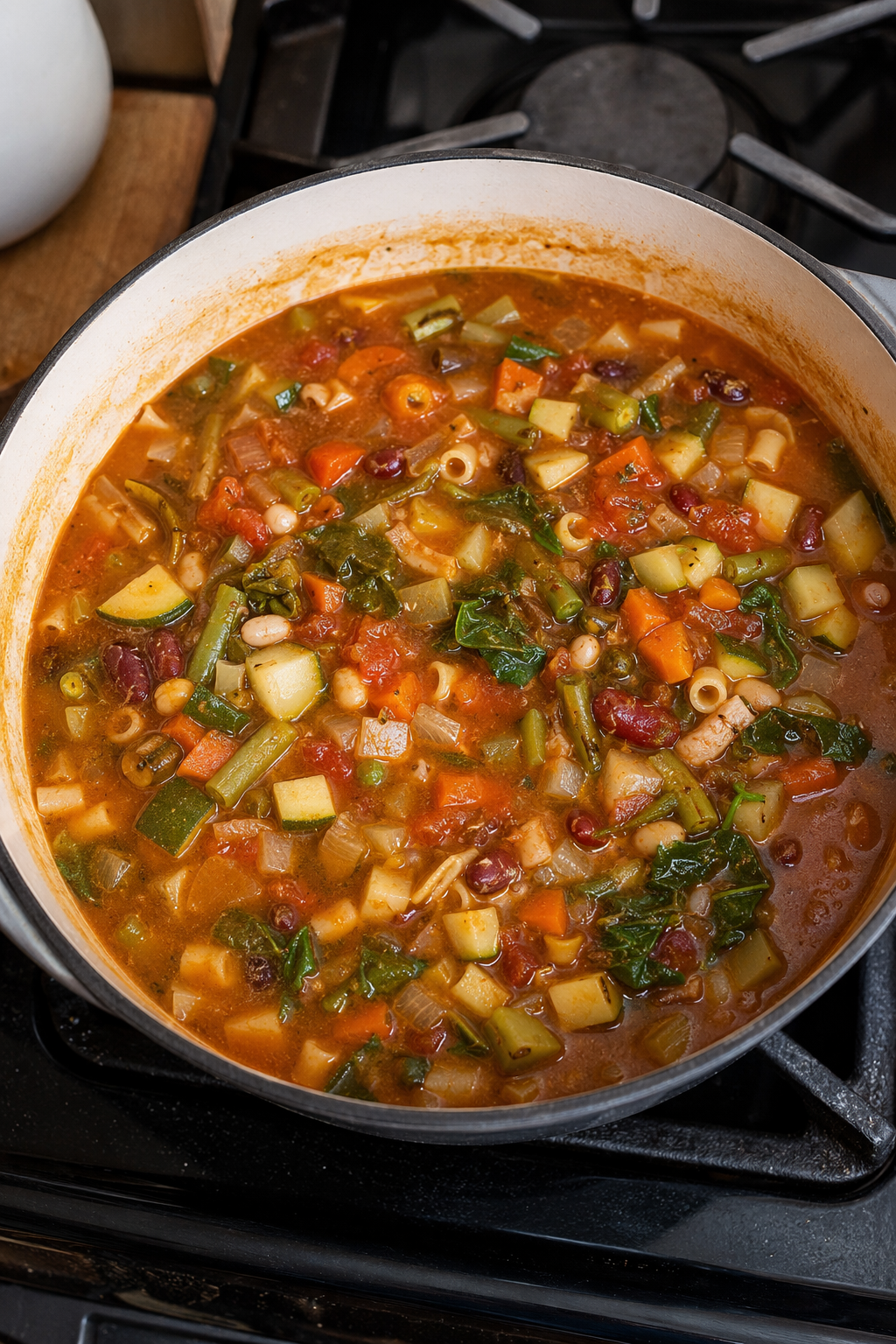 To make minestrone soup at home, start with chopped vegetables, cook them in oil, then build the broth in layers. That is the heart of a classic minestrone soup recipe. The method is simple and works well even if this is your first time making soup from scratch.
The full cooking time is short, around 30 to 45 minutes depending on your ingredients. Most of the work happens over medium heat or a gentle simmer. If you want the authentic way to prepare Italian minestrone, focus on simple ingredients and steady cooking, not complicated steps.
Step 1: Preparing Your Vegetables and Base
First, chop your vegetables into small, even pieces. That helps everything cook at the same pace and makes each spoonful easier to eat. Start with onion, celery, and carrots, since they form the base of the soup.
Next, warm olive oil in your pot and add those vegetables with a pinch of salt. Cook them until the onion turns soft and the vegetables begin to tenderize. After that, stir in minced garlic or finely chopped cloves of garlic so the flavor spreads through the whole pot.
- Dice onion, celery, and carrots into similar sizes.
- Heat olive oil before adding the vegetables.
- Add a pinch of salt to help the vegetables soften.
- Stir in minced garlic after the first vegetables have cooked a bit.
This first step sets the tone for the whole soup, so give it a few extra minutes.
Step 2: Cooking and Building Deep Flavor
Once the base vegetables are soft, add tomato paste and let it cook until it becomes a deeper red. This step matters. It changes the flavor from sharp and raw to sweeter and fuller. Bay leaves can go in now too, since they slowly season the broth as it simmers.
After that, pour in broth and water, then add potatoes and any lentils you are using. Season with salt and black pepper. Bring the pot to a boil, then lower it to a gentle simmer. This slow cooking helps build a rich tomato broth without much effort.
A simple trick can make the soup feel even deeper and thicker. Near the end of cooking, blend a couple cups of the soup and stir it back in. You get a creamy texture from the beans and potatoes without adding cream.
Step 3: Adding Pasta, Beans, and Final Touches
Now it is time for the ingredients that make minestrone feel complete. Add your beans and let them warm through. Then stir in the pasta and cook until just al dente. Small pasta usually needs only a few minutes, so keep an eye on it.
When the pasta is almost ready, add spinach and let it wilt into the soup. Taste and adjust the seasoning. If the pot seems too thick, add a splash of water or broth. This is one of those soup recipes that gets even better as the flavors settle together.
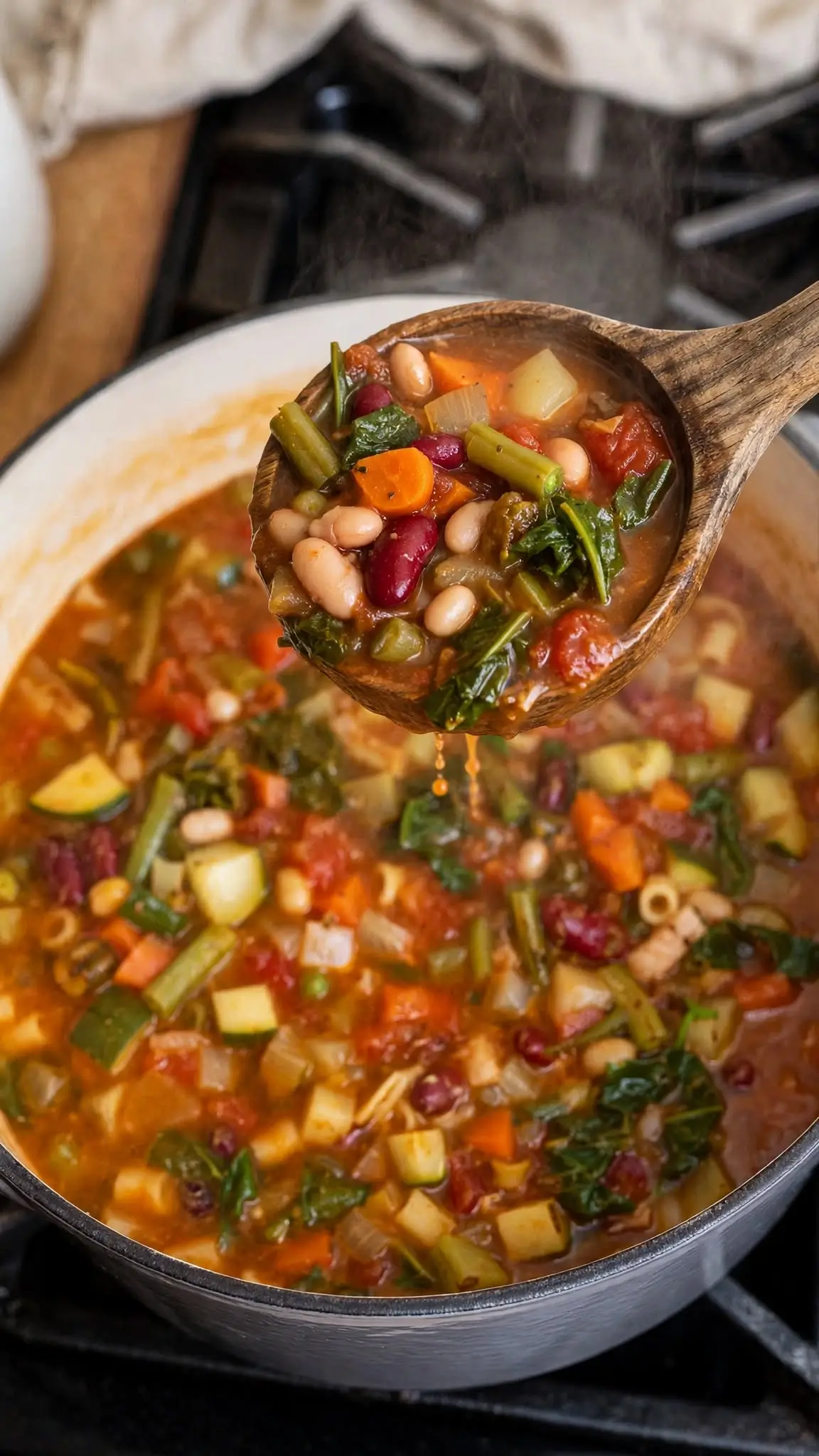
To serve, remove the bay leaves and any parmesan rind. Spoon the soup into bowls and finish with parmesan cheese, black pepper, and fresh parsley if you like. A side of crusty bread turns it into an easy, comforting meal.
If you love cozy one-pot soups like this one, try our Clam Chowder Recipe, this Easy 4 Ingredient Potato Soup, or our Leftover Rotisserie Chicken Soup next.
Ingredients
- 2 tbsp olive oil
- 1 onion diced
- 2 carrots diced
- 2 stalks celery diced
- 3 cloves garlic minced
- 2 tbsp tomato paste
- 1 potato peeled and cubed
- 6 cups vegetable broth
- 1 can (15 oz) cannellini beans drained and rinsed
- 1 cup ditalini pasta or other small pasta
- 2 cups spinach roughly chopped
- Salt and black pepper to taste
- Parmesan cheese optional, for serving
Instructions
- Heat olive oil in a large pot over medium heat. Add onion, carrots, and celery with a pinch of salt and cook until softened, about 5-7 minutes.
- Stir in the garlic and tomato paste and cook for 1 minute until fragrant.
- Add the potato and vegetable broth. Bring to a boil, then reduce to a simmer and cook for 10 minutes.
- Add the beans and pasta. Simmer until the pasta is al dente, about 8-10 minutes.
- Stir in the spinach and cook until wilted, 1-2 minutes. Season with salt and pepper to taste.
- Serve hot with grated Parmesan and crusty bread.
Notes
Nutrition

Frequently Asked Questions
Small pasta is best for minestrone soup because it cooks quickly and mixes evenly with the vegetables and beans. Ditalini, elbows, shells, and tiny pastina all work well.
Yes, you can make minestrone soup gluten-free by using gluten-free pasta. The rest of the soup already fits well because the main ingredients are vegetables, broth, and beans.
No. Minestrone soup is often vegetarian, but it does not have to be. Use vegetable broth for a fully meat-free version, or chicken broth if you prefer. The beans, pasta, and vegetables stay the same either way.