
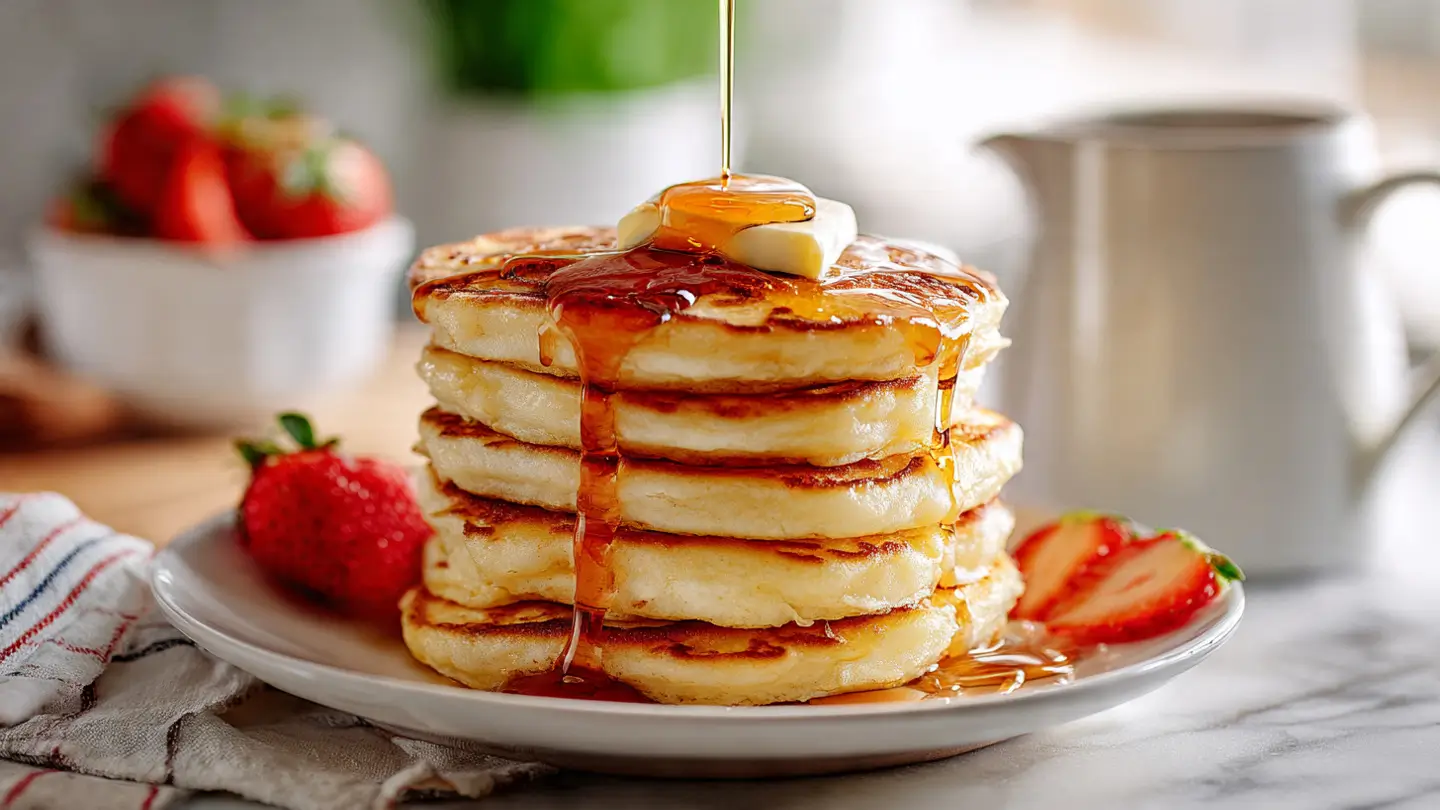
✍️ Written & tested by Chef Tanya · About the chef
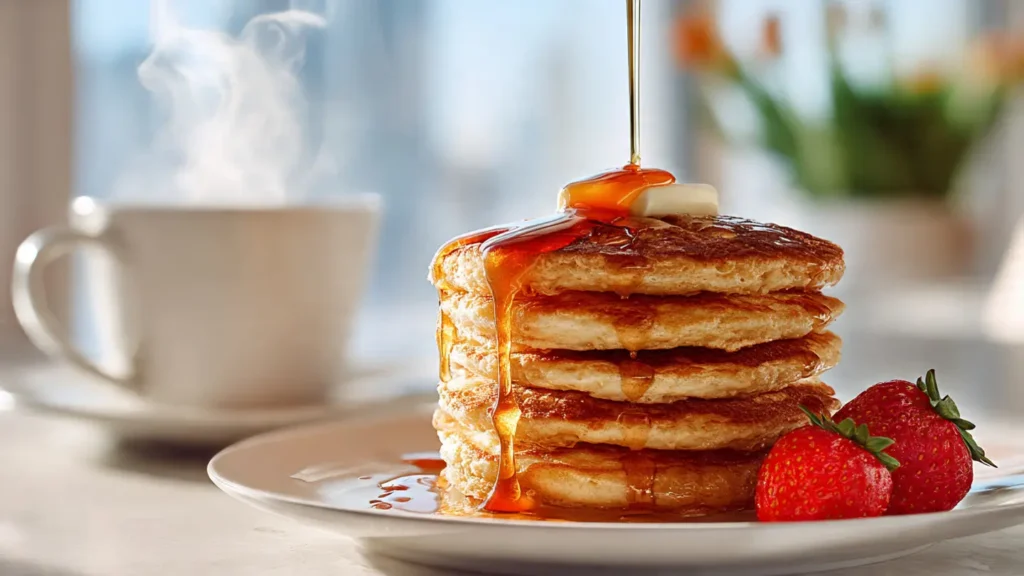
Key Highlights
This fluffy buttermilk pancakes recipe is your guide to making the ultimate breakfast. You will learn the secrets to achieving the best pancakes every time.
- Discover why using real buttermilk is essential for a tender and fluffy texture.
- This buttermilk pancakes recipe provides step-by-step instructions for perfect results.
- Learn how to mix your batter to avoid dense, tough pancakes.
- Get tips for cooking your pancakes to a perfect golden brown.
- Find ideas for delicious pancake toppings to complete your meal.
- Master the science behind what makes these homemade buttermilk pancakes so special.
Essential Ingredients for Fluffy Buttermilk Pancakes
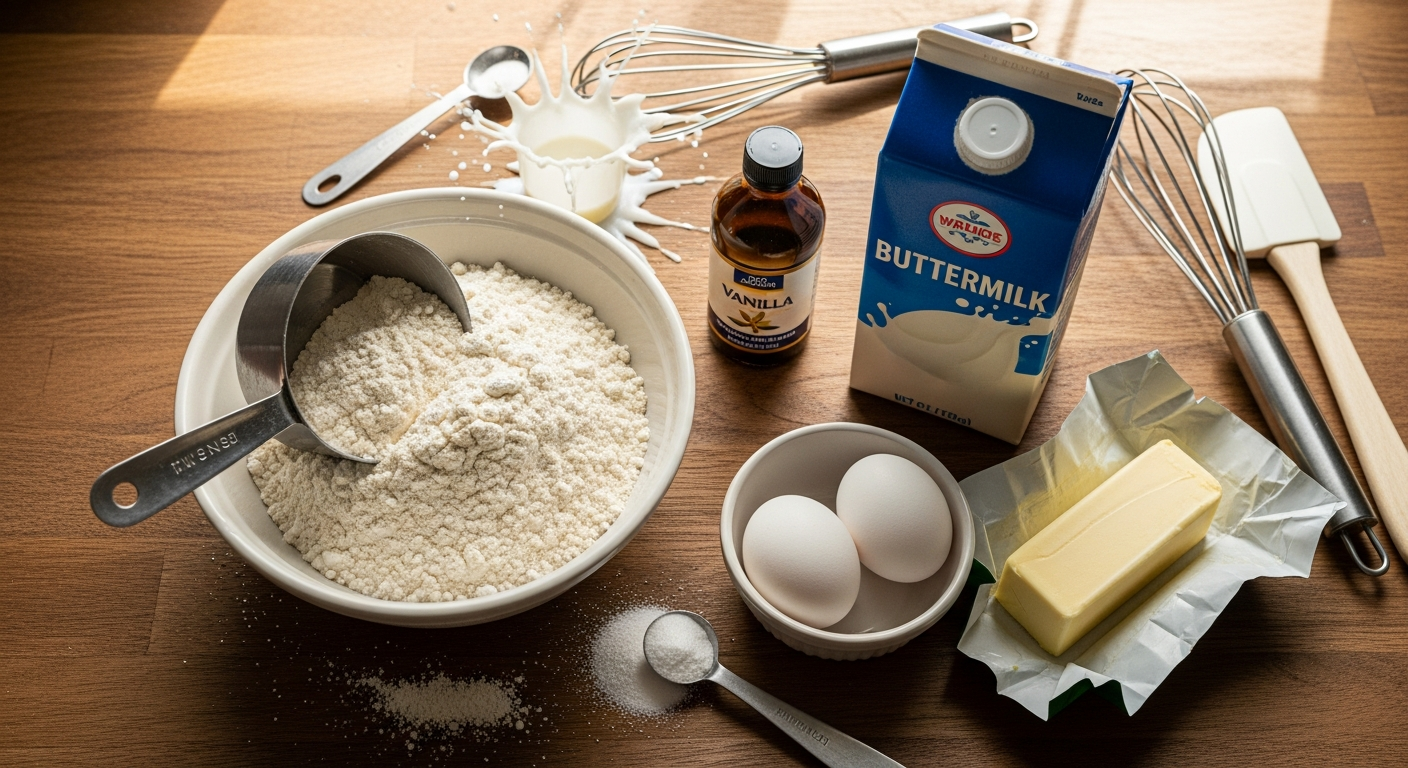
To make the best buttermilk pancakes at home, you need simple, basic ingredients. The dry ingredients include all-purpose flour, sugar, salt, baking soda, and baking powder. You will combine these in a large bowl. For the wet ingredients, you will need eggs, real buttermilk, melted butter, and a touch of vanilla extract. Each ingredient plays a crucial role in creating the perfect texture and flavor.
Gathering these items before you start makes the process smooth and easy. The specific measurements for this buttermilk pancakes recipe are listed on the recipe card below. Using quality ingredients ensures your pancakes turn out light, fluffy, and delicious every single time. Now, let’s explore why certain ingredients are so important for this recipe.
Choosing the Right Flour and Leavening Agents
The secret to extra-fluffy pancakes starts with your dry ingredients, specifically the flour and leavening agents. For this recipe, regular all-purpose flour is the ideal base. It provides the right structure without making the pancakes heavy. While you could make whole wheat pancakes, all-purpose flour is recommended for achieving that classic, light texture.
This recipe uses both baking powder and baking soda to give the pancakes a serious lift. Using only baking soda would neutralize the buttermilk’s tanginess. The combination is key.
- Baking soda: Reacts with the acid in the buttermilk to create bubbles.
- Baking powder: Provides additional leavening, ensuring the fluffiest pancakes.
- Combined effect: This dual action creates a light, airy crumb while preserving the buttermilk’s signature flavor.
By balancing these leavening agents correctly, you create the perfect environment for the best pancakes. This careful combination is what sets this recipe apart, delivering consistently fluffy results.
Using Buttermilk for Tender Pancakes
Buttermilk is the star ingredient that makes these pancakes exceptionally tender and fluffy. Real buttermilk is the liquid left over after churning butter. Its natural cultures and slight tanginess work to tenderize the gluten in the flour, resulting in a softer crumb. This is why this classic buttermilk pancakes recipe insists on using the real thing for the best texture and flavor.
While you can make your own buttermilk substitute by adding a teaspoon of lemon juice or white vinegar to a cup of whole milk, it’s not the same. This homemade version mimics the tangy flavor but lacks the thick, creamy consistency of true buttermilk. The thickness of real buttermilk is crucial for creating a thick batter, which leads to fluffier pancakes.
For this buttermilk pancakes recipe, it is highly recommended to use real, store-bought buttermilk. The difference in texture is noticeable. Using a substitute will result in thinner, less fluffy pancakes. To achieve that melt-in-your-mouth quality, stick with real buttermilk.
Why Buttermilk Makes Pancakes Extra-Fluffy
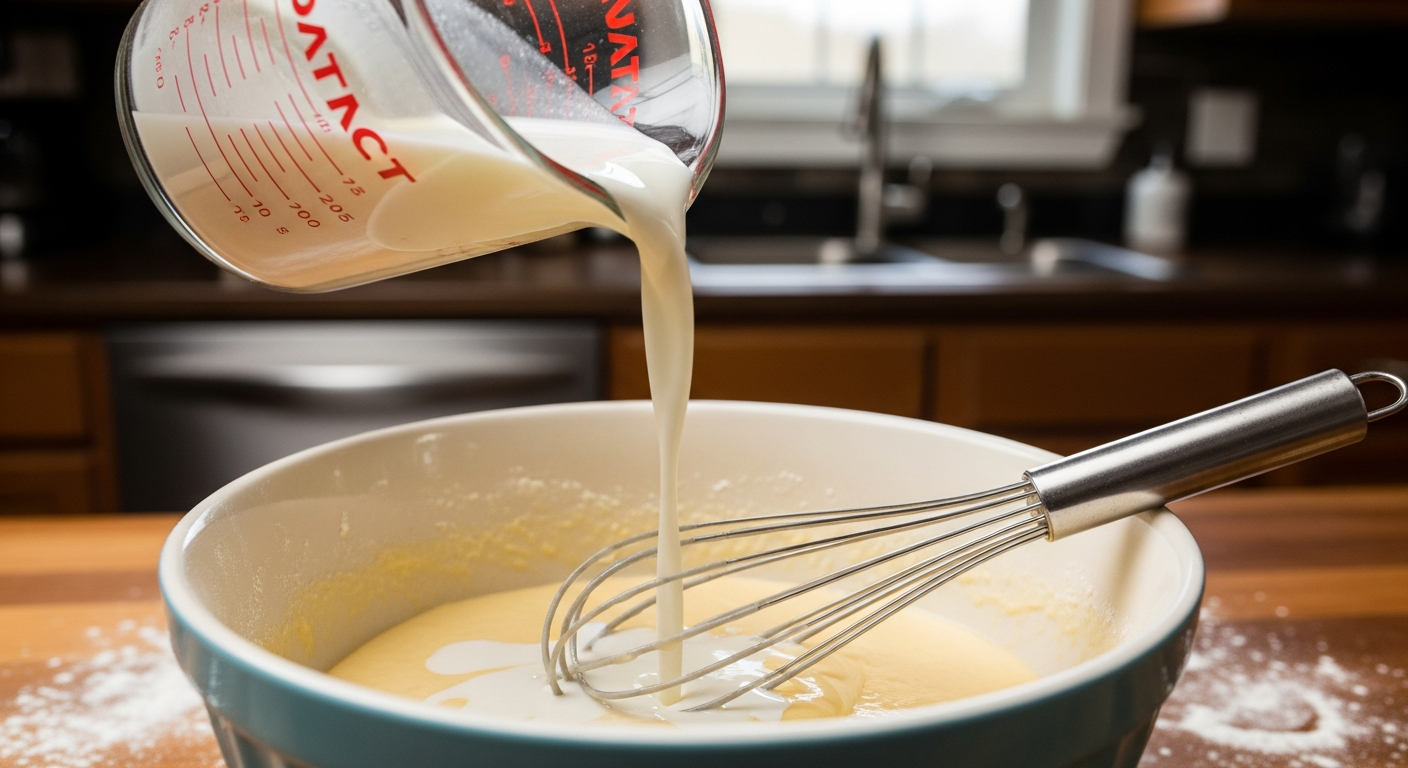
The reason buttermilk makes pancakes so fluffy and tender is due to its acidity and composition. When the acid in real buttermilk reacts with the baking soda in the batter, it produces carbon dioxide gas. These gas bubbles get trapped in the batter, causing the homemade buttermilk pancakes to rise and become incredibly light and airy as they cook to a beautiful golden brown.
This chemical reaction does more than just add lift. The acid in the buttermilk also breaks down the gluten in the flour, which results in a more tender crumb. This is why the best pancakes are often made with buttermilk. The science behind this ingredient is simple but effective, creating a superior texture that is hard to replicate. Let’s look closer at the science and some potential substitutes.
Science Behind Buttermilk’s Effect on Texture
The secret to getting extra-fluffy pancakes lies in the chemical reactions within the pancake batter. The acidity of buttermilk is a key player. It activates the baking soda, creating bubbles that make the pancakes rise. This recipe also includes baking powder, which provides a second lift, ensuring the fluffiest possible texture for your buttermilk pancakes.
Many recipes suggest beating egg whites to stiff peaks to incorporate air, but this can make pancakes too airy and takes extra time. This recipe achieves a perfect, melt-in-your-mouth texture by focusing on the leavening agents and the thickness of the batter instead. The combination of baking soda and baking powder with buttermilk creates the ideal lift without extra steps.
Understanding these components helps you make the best pancakes. The interaction between the acid and the leaveners is what creates the magic.
| Ingredient | Role in Fluffiness |
|---|---|
| Buttermilk (Acid) | Activates baking soda and tenderizes gluten for a soft texture. |
| Baking Soda | Reacts with buttermilk’s acid to create carbon dioxide bubbles for lift. |
| Baking Powder | Provides additional leavening, ensuring maximum height and fluffiness. |
Common Buttermilk Substitutes and When to Use Them
While real buttermilk is strongly recommended for this recipe, you might find yourself needing a substitute in a pinch. You can make your own buttermilk substitute, but be aware that it will change the final texture of your pancakes. The most common method is to use milk and an acid.
A popular buttermilk substitute involves adding one tablespoon of white vinegar or lemon juice to a measuring cup and then filling it to the one-cup line with whole milk. Let it sit for 5-10 minutes. While this creates a similar tang, it doesn’t replicate the thick consistency of real buttermilk. Other options are also available.
Here are a few substitutes you can try, though they may alter the recipe:
- Milk and Lemon Juice/Vinegar: The most common DIY option.
- Sour Cream or Yogurt: Thin with milk or water to reach a buttermilk-like consistency.
- Powdered Buttermilk: Follow package instructions to reconstitute. It is a better option than a milk and vinegar mix but still not as good as fresh.
Remember, for the best results as intended by the recipe card, using real buttermilk is always the preferred choice.
Step-by-Step Guide to Making Classic Fluffy Pancakes
This simple pancake recipe will help you create delicious, fluffy pancakes from scratch. Making homemade pancakes is easier than you think and tastes much better than store-bought mixes. The process involves mixing your dry and wet ingredients separately, combining them gently, and cooking the pancake batter on a hot, buttered large skillet or griddle.
Following the steps on the recipe card will guide you to success. From mixing the batter to flipping at the right moment, each step is designed for perfect results. These breakfast recipes are about method as much as ingredients. Soon, you will be an expert at making light and fluffy pancakes for your family.
Mixing the Batter for Optimal Fluffiness
The best way to mix pancake batter to avoid tough pancakes is to be gentle and avoid over-mixing. Start by whisking your dry ingredients together in a large bowl. In a separate bowl, whisk together the wet ingredients, including your eggs and buttermilk. It can be helpful if your eggs and buttermilk are at room temperature.
Create a well in the center of the dry ingredients and pour the wet ingredients into it. Using a wooden spoon or a spatula, stir the ingredients together until they are just combined. It is very important not to over-mix. A few lumps and streaks of flour remaining in the batter are perfectly fine and actually desirable for fluffy pancakes.
Once the flour is almost incorporated, fold in the melted butter. The final pancake batter should be very thick. Over-mixing develops the gluten in the flour, which results in rubbery, dense pancakes instead of the light, fluffy ones you want. A gentle hand is the key to success.
Resting the Pancake Batter: Is It Necessary?
Have you ever wondered if letting your pancake batter rest makes a difference? For this classic buttermilk pancakes recipe, a short batter rest is beneficial. Allowing the batter to sit for a few minutes while your griddle preheats gives it a chance to thicken up. This thickening contributes to even fluffier pancakes.
The rest period allows the gluten that was developed during mixing to relax, which can lead to a more tender pancake. It also gives the baking powder more time to activate, creating more air bubbles in the batter. This is one of those simple secrets to achieving extra fluffiness.
While it is not strictly necessary if you are short on time, a brief rest can improve your final product.
- Allows batter to thicken: A thicker batter results in taller, fluffier pancakes.
- Relaxes gluten: This helps make the pancakes more tender.
- Hydrates the flour: The liquid fully absorbs into the dry ingredients, improving texture.
Just a few minutes of rest can make a noticeable difference, so it is a step worth taking as you follow the recipe card.
Cooking Techniques for Golden, Melt-in-Your-Mouth Pancakes
To get golden, melt-in-your-mouth pancakes every time, your cooking technique is just as important as the pancake recipe itself. Preheat your large skillet or griddle over medium heat. Cooking pancakes on heat that is too high will burn the outside before the inside is cooked. Using the right temperature ensures they cook evenly.
Generously butter the griddle before pouring the batter. This helps create crisp edges and prevents sticking. As you cook batches, you can keep the finished fluffy pancakes warm in a preheated oven at a low temperature, around 200°F (93°C). A toaster oven also works well for this. These simple steps will help you serve the best pancakes, warm and perfect.
Ideal Griddle Temperature and Timing
Achieving that perfect golden brown color on your pancakes requires the right griddle temperature. The ideal temperature is 375°F (190°C). If you are using an electric griddle, you can set it to this exact temperature. If you are using a large skillet on the stove, preheat it over medium heat for several minutes. Avoid high heat, as it will cook the pancakes unevenly.
To test if your pan is ready, flick a few drops of water onto the surface. If they dance around before evaporating, the temperature is perfect. Once hot, pour about 1/3 cup of pancake batter onto the griddle for each pancake. You may need to spread the thick batter slightly with the back of a spoon.
Cook until bubbles start to pop on the surface and form little holes, which takes about 2 minutes. Flip and cook the other side for another 1-2 minutes until cooked through. Following this timing from the recipe card is key for great breakfast recipes.
| Cooking Stage | Visual Cue | Approximate Time |
|---|---|---|
| First Side | Bubbles pop and form holes on the surface; edges look set. | ~2 minutes |
| Second Side | The pancake is cooked through and golden brown. | ~1-2 minutes |
Tips to Avoid Dense or Heavy Pancakes
To prevent your buttermilk pancakes from turning out dense or heavy, pay close attention to your technique. The most common mistake is over-mixing the pancake batter. Over-mixing develops gluten, which makes pancakes tough and rubbery instead of light and fluffy. Mix only until the ingredients are just combined; a few lumps are okay.
Another key is to ensure your leavening agents are fresh. Both baking powder and baking soda lose their potency over time, so check the expiration dates. Using ingredients at room temperature, like eggs and buttermilk, can also help them incorporate more easily into the batter, reducing the need for excess mixing.
Here are a few essential tips for the best pancakes:
- Do not over-mix the batter. Stop when there are still a few flour streaks.
- Let the batter rest for a few minutes before cooking.
- Use fresh baking powder and baking soda.
- Cook on a properly preheated griddle at medium heat.
- Ensure your batter is thick; this recipe is designed to have a very thick batter.
By following these tips, you can ensure your pancakes are fluffy and light every time.

Ingredients
- Dry Ingredients
- 2 cups 250 g all-purpose flour, spooned and leveled
- 2 tbsp granulated sugar
- 1½ tsp baking powder
- 1 tsp baking soda
- ½ tsp salt
- Wet Ingredients
- 2 cups 480 ml real buttermilk, room temperature
- 2 large eggs room temperature
- 1 tsp vanilla extract
- 3 tbsp unsalted butter melted and slightly cooled
- For the Griddle
- Butter or non-stick cooking spray
- Optional Mix-Ins
- ½ cup fresh or frozen blueberries
- ½ cup chocolate chips
- ½ tsp cinnamon add to dry ingredients
Instructions
-
Whisk dry ingredients. In a large bowl, whisk flour, sugar, baking powder, baking soda, and salt until evenly combined. Set aside.
-
Whisk wet ingredients. In a separate medium bowl, whisk together the buttermilk, eggs, and vanilla extract. While whisking, slowly drizzle in the melted butter so it doesn’t scramble the eggs.
-
Combine wet and dry. Pour the wet ingredients into the dry ingredients. Using a spatula or wooden spoon, fold gently until just combined — stop the moment no large dry flour streaks remain. The batter should be thick and visibly lumpy. Lumps are correct and essential; do not smooth them out.
-
Rest the batter. Let the batter sit undisturbed 5–10 minutes while you preheat the griddle. This allows the buttermilk and baking soda to react, the gluten to relax, and the flour to fully hydrate — all contributing to a taller, fluffier pancake.
-
Preheat the griddle. Heat a large non-stick skillet or griddle over medium heat (about 350°F/175°C). To test readiness, flick a few drops of water onto the surface — they should dance and evaporate immediately. Lightly butter the surface just before adding batter.
-
Cook the pancakes. Pour about ⅓ cup of batter per pancake onto the griddle. The batter is thick — use the back of a spoon to spread each round slightly if needed. Cook undisturbed 2 minutes until bubbles form and pop on the surface and the edges look set.
-
Flip once. Flip each pancake confidently in one motion. Cook the second side 1–2 minutes until golden brown. Flip only once — multiple flips deflate the fluffiness.
-
Keep warm. Transfer finished pancakes to a baking sheet in a 200°F (93°C) oven while cooking remaining batches. Serve warm with your favorite toppings.
Notes
Do not overmix — this is the single most important rule; overmixing builds gluten and results in flat, rubbery pancakes instead of fluffy ones.
Thick batter = tall pancakes — if the batter seems too thick to pour, that is correct; a thin batter produces flat pancakes.
Room temperature ingredients — eggs and buttermilk at room temperature incorporate more easily and reduce the need for extra mixing.
Fresh leaveners matter — check that baking powder and baking soda have not expired; old leaveners will not provide proper lift.
Buttermilk substitute (in a pinch): Add 2 tbsp white vinegar or lemon juice to a 2-cup measuring cup; fill to the 2-cup line with whole milk. Let sit 5–10 minutes. Note: this thinner substitute will yield less fluffy, slightly flatter results than real buttermilk.
Nutrition

Tanya’s Kitchen Note
Rest the batter 10 minutes before it hits the griddle – those lumps you’re tempted to whisk away are what keep them fluffy. And wait for bubbles across the whole surface before flipping; one flip only.
Frequently Asked Questions
You can use a buttermilk substitute by adding one tablespoon of lemon juice or white vinegar to one cup of whole milk. However, the recipe card strongly recommends real buttermilk. A substitute will make the pancake batter thinner and the final pancakes will not be as thick or fluffy.
The best pancake toppings complement the golden brown pancakes perfectly. Classic choices include pure maple syrup and butter. For other ideas, try fresh strawberries, blueberries, or sliced bananas. You can also add chocolate chips to the batter or serve with a dollop of whipped cream for an extra-special treat.
About the author
👩🍳 Chef Tanya is the recipe developer behind TanyaRecipes.com. Every recipe on this site is cooked and tasted in her own kitchen before it’s published — if it doesn’t work at home, it doesn’t make the blog. Read her story →